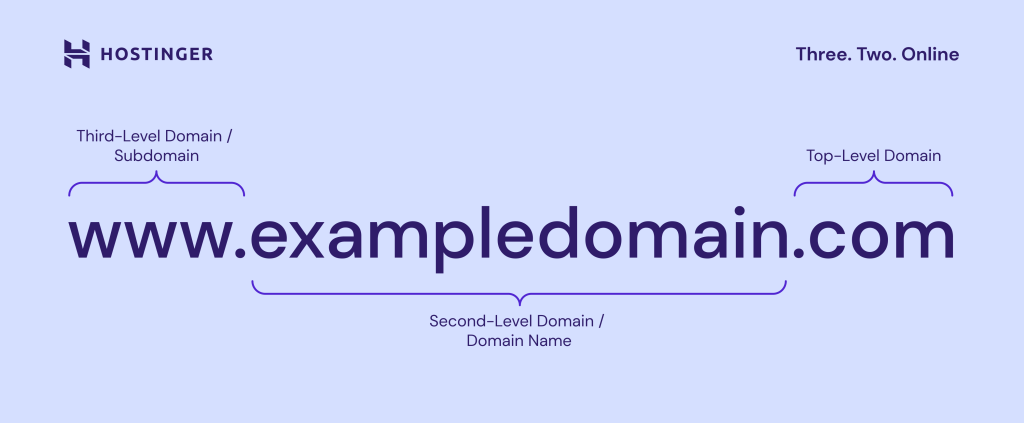
The country code top-level domain for Serbia has been active since 2007, when the Serbian National Internet Domain Registry (RNIDS) assumed administrative control from the previous Yugoslav domain structure. This transition marked a significant milestone in Serbia’s digital sovereignty.
How Serbia’s.rs Domain Came Under RNIDS Management
The.yu domain served as the shared country code for Yugoslavia for decades. Following the dissolution of Serbia and Montenegro in 2006, the need for a distinct Serbian domain became urgent. RNIDS, a non-profit organization founded in 2005, took over the delegation of the.rs domain from the Serbian government in 2007. The registry operates under the Serbian Ministry of Trade, Tourism and Telecommunications. RNIDS manages domain registration policies, maintains the central DNS infrastructure, and ensures compliance with international ICANN standards. The organization also oversees second-level domains such as.co.rs,.org.rs,.edu.rs, and.gov.rs, each serving different institutional purposes. Registration of.rs domains is open to both Serbian and international applicants, making it accessible beyond national borders. Für zusätzlichen Hintergrund erklärt RS Domains Registration .rs domain names Accredited Registrar das Thema ausführlicher
| Second-Level Domain | Intended Purpose |
|---|---|
| .co.rs | Commercial entities and businesses |
| .org.rs | Non-profit organizations |
| .edu.rs | Educational institutions |
| .gov.rs | Government bodies of Serbia |
Common Misconceptions About Registering a Domain Name RS
rs domain. In reality, the registry imposes no citizenship or residency requirement. Another misconception involves the relationship between.rs and the older.yu domain. The.yu domain was officially phased out and deleted from the root zone by ICANN in 2010, meaning it no longer functions. Some people also assume that.rs domains are primarily used for Serbian-language content. While many.rs sites do serve Serbian audiences, the domain has no language restriction whatsoever. Businesses targeting Balkan markets or diaspora communities frequently use it as a regional identifier. Finally, some believe that.rs domains are less trustworthy than generic top-level domains like.com. RNIDS maintains strict technical and policy standards, and the domain is fully integrated into global DNS infrastructure.
How the.rs Domain Compares to Other Balkan Country Code TLDs
Serbia’s.rs exists alongside several neighboring country code domains, each with distinct characteristics. Croatia’s.hr domain, managed by CARNET since 1993, requires registrants to have a connection to Croatia for second-level registration. Bosnia and Herzegovina’s.ba domain, administered by the University of Sarajevo’s academic network, has similarly restrictive policies for certain second-level categories. Slovenia’s.si domain, operated by ARNES, is notable for its strong adoption rate relative to the country’s small population. Montenegro’s.me domain, which became available after Montenegro’s independence in 2006, has been marketed globally as a personal branding domain rather than strictly a national one. The.rs domain occupies a middle ground: it is internationally accessible like.me but retains a clear national identity. Unlike.hr, it does not require local presence for most registrations. This openness has contributed to steady adoption among Serbian businesses, startups, and individuals seeking a recognizable national web presence.
What Is Publicly Confirmed About the.rs Domain Registry
The organization holds regular public board meetings and publishes annual reports detailing its activities and finances. What remains less clear is the exact number of active versus dormant.rs domains at any given time, as RNIDS reports aggregate figures rather than distinguishing between actively used and parked domains. The precise economic impact of the.rs domain on Serbia’s digital economy has not been formally studied in publicly available research. Additionally, while RNIDS enforces dispute resolution policies based on international standards, the outcomes of individual domain disputes are not always publicly disclosed. The registry’s long-term strategic roadmap beyond current policy cycles has not been detailed in public documents.
Frequently Asked Questions
Who manages the.rs domain registry for Serbia?
The Serbian National Internet Domain Registry, known as RNIDS, manages the.rs country code top-level domain. It is a non-profit organization established in 2005 and operates under the oversight of Serbia’s Ministry of Trade, Tourism and Telecommunications.
Is it true that only Serbian citizens can register a.rs domain?
No, this is a common misconception. Registration is open to individuals and organizations worldwide. There is no citizenship or residency requirement for most.rs domain registrations, making it accessible to international applicants.
What is a.rs domain and what does the abbreviation stand for?
A.rs domain is the country code top-level domain assigned to Serbia. The abbreviation “rs” comes from the ISO 3166-1 alpha-2 country code for the Republic of Serbia, following the standard naming convention for country code domains.
How does the.rs domain differ from the former.yu domain?
The.yu domain was the country code for Yugoslavia and later Serbia and Montenegro. It was officially retired and removed from the global DNS root zone in 2010. The.rs domain replaced it as Serbia’s dedicated country code, with entirely separate management and registration policies.
Why did Serbia need its own domain name after 2006?
After the dissolution of the state union of Serbia and Montenegro in 2006, Serbia required a distinct digital identity separate from the shared.yu domain. The.rs domain provided this independent national presence on the internet.