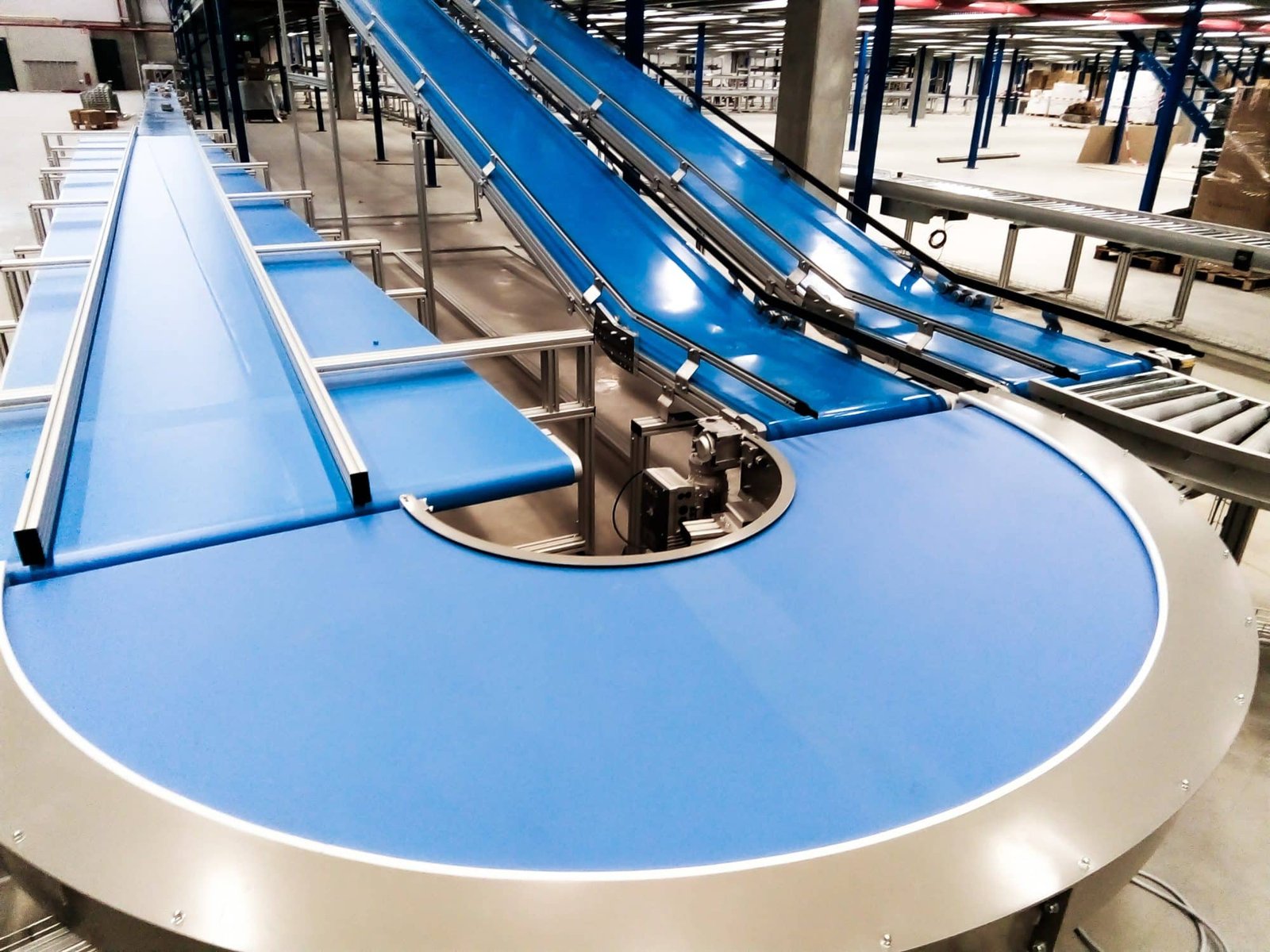
Conveyor belt systems form the backbone of modern material handling across mining, manufacturing, and distribution. The first industrial conveyor belt was patented by Thomas Robins in 1892 for transporting coal and ores.
How Conveyor Belt Systems Reshaped Global Industries
Before mechanized belt systems, bulk material transport relied on manual labor, horse-drawn carts, and rudimentary rail networks. These methods were slow, labor-intensive, and costly. The introduction of continuous belt technology dramatically increased throughput in mining operations worldwide. Für zusätzlichen Hintergrund erklärt Conveyor Belts – McMaster-Carr das Thema ausführlicher
By the early 20th century, conveyor belts had become essential in automotive assembly lines. Ford Motor Company adopted conveyor-based assembly processes around 1913, reducing Model T production time significantly. This innovation influenced manufacturing practices across industries for decades.
Today, conveyor systems operate in airports, warehouses, food processing plants, and Amazon fulfillment centers. They move millions of packages daily with minimal human intervention. Modern systems integrate sensors, variable speed drives, and automated sorting mechanisms.
The global supply chain depends on these systems more than most consumers realize. Without conveyor belt infrastructure, e-commerce logistics and just-in-time manufacturing would be virtually impossible at current scale.
Conveyor Belt Systems Compared to Alternative Transport Methods
Several material transport technologies compete with or complement conveyor belt systems in industrial settings. Each has distinct advantages depending on the application, terrain, and volume requirements.
Truck-based transport offers flexibility for variable routes but incurs higher fuel and labor costs per ton moved. Rail systems handle heavy bulk loads efficiently over fixed paths but lack the adaptability of belt systems in confined spaces. Pneumatic conveying works well for fine powders but consumes more energy per unit of material.
Conveyor belts excel in continuous, high-volume operations where the transport path remains relatively fixed. They consume less energy per ton-kilometer than trucking and produce fewer emissions. Underground mining operations particularly benefit from belt systems because they can navigate inclines and curves that challenge other methods.
However, conveyor systems require significant upfront capital investment and dedicated infrastructure. For short-distance or low-volume applications, forklifts and manual handling remain more economical choices.
Key Milestones in Conveyor Belt Development
The evolution of conveyor belt technology spans more than a century of engineering innovation. Several breakthroughs defined the trajectory of this essential industrial tool.
In 1892, Thomas Robins invented the first conveyor belt designed specifically for carrying heavy bulk materials like coal and ore. This invention addressed the growing demands of American mining operations during rapid industrialization.
Richard Sutcliffe introduced the first underground conveyor belt for coal mines in 1905 in the United Kingdom. This development improved mine safety and productivity by reducing the need for manual haulage in dangerous conditions.
The B.F. Goodrich Company developed the first rubber conveyor belt with multiple layers in 1913, greatly improving durability and load capacity. Rubber belting replaced earlier canvas and leather designs, extending service life considerably.
Intralox introduced modular plastic belting in 1971, revolutionizing food processing applications where hygiene and washdown requirements demanded non-porous surfaces. This innovation opened new markets in packaged goods and beverage production.
Recent decades have brought smart conveyor systems equipped with IoT sensors, predictive maintenance algorithms, and energy-efficient motor technologies. These advances continue to expand the capabilities and efficiency of belt-based material handling.
Origins and Engineering Principles Behind Conveyor Belt Design
The fundamental engineering concept behind a conveyor belt is straightforward: a continuous loop of material rotates around two or more pulleys, creating a moving surface for transporting goods. The simplicity of this principle belies the complexity of designing systems for demanding industrial environments.
Early conveyor designs used canvas or leather belts stretched over wooden or steel frames. These materials wore quickly under heavy loads and harsh conditions. The shift to rubber compounds in the early 1900s represented a major leap in reliability and load-bearing capacity.
Modern conveyor belts consist of multiple layers: a top cover that contacts the material, a carcass that provides tensile strength, and a bottom cover that interfaces with pulleys and idlers. The carcass typically uses steel cord or synthetic fabric like polyester and nylon.
Belt tension calculations, pulley diameter specifications, and idler spacing all require careful engineering to prevent excessive wear, spillage, and system failure. Standards published by organizations like DIN and CEMA provide design guidelines used by engineers worldwide.
The external resource at McMaster-Carr’s conveyor belt catalog offers a practical overview of available belt types and specifications for various industrial applications.
Frequently Asked Questions
Where are conveyor belt systems most commonly used today?
Conveyor belt systems are found in mining operations, automotive manufacturing plants, airport baggage handling, food processing facilities, and large-scale e-commerce fulfillment centers. They also operate in cement plants, power stations, and agricultural processing operations worldwide.
How does a conveyor belt differ from a roller conveyor system?
A conveyor belt uses a continuous flexible belt stretched over pulleys to create a smooth moving surface. A roller conveyor uses individual rotating cylinders to move items. Belt systems handle bulk materials and small items better, while roller conveyors suit rigid, flat-bottomed packages.
Is it true that conveyor belts cause more workplace injuries than other equipment?
Conveyor-related injuries do occur, particularly involving pinch points and entanglement hazards. However, modern safety standards, emergency stop systems, and guarding requirements have substantially reduced incident rates. Proper training and lockout procedures remain essential for safe operation.
Why did rubber replace earlier belt materials like canvas and leather?
Rubber offered superior tensile strength, moisture resistance, and durability compared to organic materials. Canvas and leather belts deteriorated quickly under heavy loads and wet conditions. Rubber compounds also provided better grip on pulleys and resisted abrasion from bulk materials.
What is the conveyor belt industry best known for contributing to modern logistics?
The conveyor belt industry is best known for enabling continuous, high-volume material transport that underpins modern supply chains. Without belt-based systems, the speed and scale of contemporary manufacturing, mining, and package delivery would be unachievable.